When Should New Mothers Get an Ultrasound After Delivery?
Summary:
Learn when new mothers may need an ultrasound after delivery, what postpartum symptoms can lead to imaging, how the test supports diagnosis, and when to seek prompt medical assessment.
Table of Contents
ToggleIntroduction:
The weeks after childbirth bring feeding schedules, sleepless nights, and constant attention to the baby. It is easy for a mother’s own recovery to move down the list. Yet the postnatal period is critical for identifying complications and supporting physical recovery. The World Health Organization recommends several postnatal contacts during the first six weeks, with assessments of bleeding, uterine recovery, blood pressure, pain, and infection.
An ultrasound after delivery is not automatically required for every new mother. Doctors recommend it when symptoms, examination findings, delivery complications, or medical history suggest that imaging could provide useful information. An Ultrasound Test in Coimbatore can help evaluate the uterus, pelvis, or other areas when clinically indicated.
When Should New Mothers Get an Ultrasound After Delivery?
The right time for a postpartum ultrasound depends on why it is requested. There is no single time when every new mother needs an ultrasound.
After an uncomplicated vaginal or caesarean delivery, routine postnatal care usually begins with clinical assessment rather than automatic imaging. WHO recommends monitoring vaginal bleeding, uterine tone, fundal height, temperature, pulse, and blood pressure after birth. Further checks continue through the first six weeks.
An ultrasound may be advised when recovery does not follow the expected pattern. Persistent heavy bleeding, fever, pelvic pain, unusual discharge, or concern about uterine recovery can lead a doctor to request imaging. The scan therefore becomes a diagnostic tool based on her situation.
Why Might a Doctor Recommend a Postpartum Ultrasound?
A postpartum ultrasound can help examine the uterus and pelvic structures when symptoms raise a concern. One reason is suspected retained products of conception, meaning tissue remains inside the uterus after delivery.
Research published in a systematic review found that ultrasound can help assess suspected retained products, although some ultrasound findings can also occur in a normal postpartum uterus. The scan should be interpreted alongside symptoms and clinical history.
Consider a mother who continues to have unusually heavy bleeding several days after delivery. Her doctor may assess her clinically and then recommend a pelvic ultrasound to investigate possible causes. The same principle applies when fever or pelvic tenderness raises concern about infection.
When Is an Ultrasound Test in Coimbatore Needed for Postpartum Bleeding?
Postpartum bleeding is expected, but the amount and pattern matter. Lochia normally changes as the uterus heals, gradually becoming lighter. Heavy or increasing bleeding, large clots, dizziness, weakness, or a rapid heartbeat can signal a problem that needs prompt medical attention.
If a doctor suspects retained tissue, a pelvic ultrasound may provide additional information. Doppler imaging can sometimes help assess blood flow within an abnormal-looking area, although ultrasound findings alone cannot always distinguish normal postpartum changes from pathology. For a broader understanding of postpartum health issues and the role of diagnostic assessment, Abi Scans also covers important concerns new mothers should watch for during recovery.
This is why timing should follow clinical advice rather than a fixed calendar. A mother with bleeding may need assessment immediately, while another woman recovering normally may not need an ultrasound at all.
What Other Symptoms Can Lead to a Postpartum Ultrasound?
Persistent pelvic pain, fever, uterine tenderness, or unusual vaginal discharge can prompt further evaluation. These symptoms can have several causes, so diagnosis should come from a healthcare professional.
An ultrasound can also be useful when there is concern about a pelvic collection or another structural problem. In some situations, Doppler ultrasound may be requested to evaluate blood flow, particularly when symptoms suggest a vascular or clot-related concern.
For example, sudden one-sided leg swelling and pain after delivery should not be managed by booking a routine scan several days later. Postpartum blood clots can become emergencies. Depending on the symptoms, a doctor may recommend urgent evaluation and a venous Doppler ultrasound.
How Does an Ultrasound Test in Coimbatore Help During Postpartum Recovery?
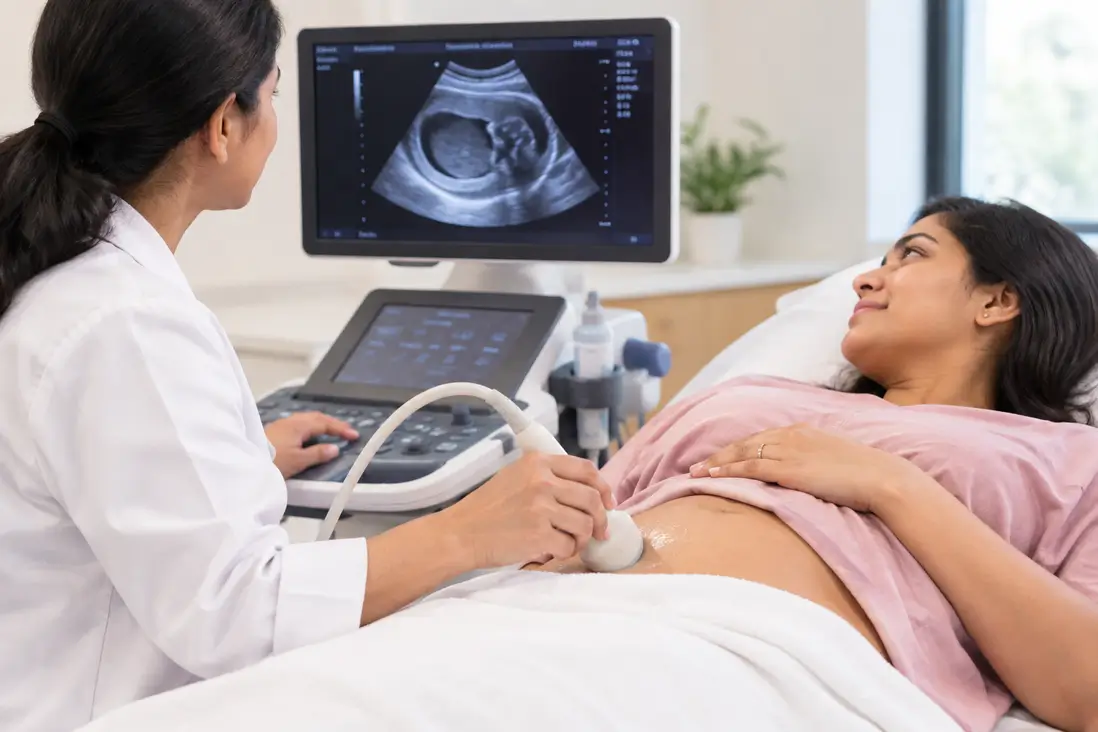
Ultrasound uses high-frequency sound waves to create real-time images and does not use ionising radiation. Abi Scans provides abdominal, pelvic, obstetric, vascular, and Doppler ultrasound services, allowing the type of scan to be selected according to the clinical question.
Preparation depends on the examination. Some ultrasound studies may require a full bladder, fasting, or no special preparation. The centre should provide instructions before the appointment.
A doctor may request an abdominal or pelvic ultrasound depending on symptoms. The radiologist interprets the images alongside clinical information. This matters because the uterus changes naturally after delivery, so an isolated image may not tell the whole story.
What Should New Mothers Do Before Booking an Ultrasound?
Start with your obstetrician or healthcare provider, especially if you have symptoms. Tell them when you delivered, whether the birth was vaginal or by caesarean section, whether the placenta was delivered completely, and whether you experienced heavy bleeding, fever, severe pain, or other complications.
Bring previous scan reports and discharge documents. They can help the radiologist understand your delivery history. If you are searching for an Ultrasound Test in Coimbatore, also check whether the centre offers the specific examination your doctor has requested.
Abi Scans’ pregnancy scan information explains the role of ultrasound across different stages of pregnancy, while its ultrasound service page outlines pelvic, abdominal, obstetric, vascular, and Doppler examinations. These resources can help you understand available imaging options before discussing the appropriate test with your doctor.
Conclusion
A postpartum ultrasound is not a routine requirement for every new mother. The decision depends on symptoms, examination findings, delivery history, and the clinical question your doctor needs answered. Persistent heavy bleeding, fever, pelvic pain, unusual discharge, or concerns about retained tissue can make imaging an important part of evaluation.
For appointments or questions about ultrasound services, contact Abi Scans. Thoughtful follow-up can help make postpartum recovery safer and more informed.
Have Any Questions?
There is no Better Time than Now, Feel Free to contact us Today.
Categories

Breast Cancer Cases in Younger Women Are Rising: What You Need to Know
Breast Cancer Cases in Younger Women Are Rising: What You Need to Know

Health Screenings Men and Women Need at Every Age
Health Screenings Men and Women Need at Every Age Summary: Learn which health screenings

How Brain Imaging Helps Detect Neurological Disorders Early
How Brain Imaging Helps Detect Neurological Disorders Early SummaryAn MRI scan in Coimbatore